 TLS Online
Performance Meter
0%
QUESTION ID:1
QUESTION ID:2
QUESTION ID:3
QUESTION ID:4
QUESTION ID:5
QUESTION ID:6
QUESTION ID:7
QUESTION ID:8
QUESTION ID:9
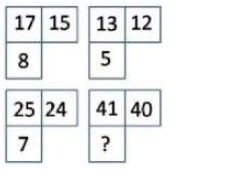
Find the missing number
QUESTION ID:10
QUESTION ID:11
QUESTION ID:12
QUESTION ID:13
QUESTION ID:14


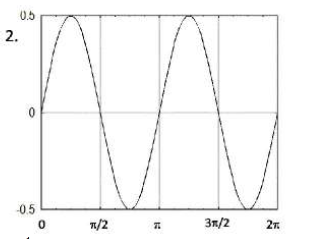
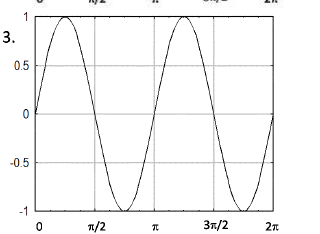
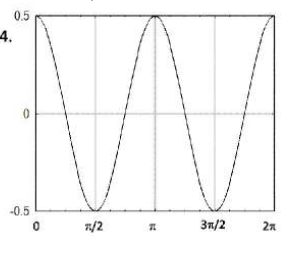
QUESTION ID:15
QUESTION ID:16
QUESTION ID:17
QUESTION ID:18
QUESTION ID:19
QUESTION ID:20
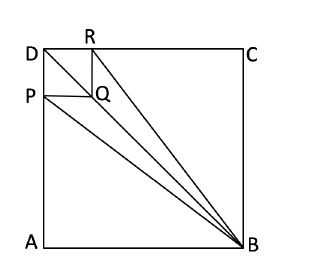
QUESTION ID:21
Choose the correct statement from the following:
QUESTION ID:22
Indicate the INCORRECT statement from the following:
QUESTION ID:23
What is the effect of sudden increase in the levels of ATP and citrate on an erythrocyte undergoing glycolysis?
QUESTION ID:24
 and
 values of a beta -strand composed of all D-amino acids will mainly occupy which quadrant in the Ramachandran plot?

QUESTION ID:25
QUESTION ID:26
Select a cellular body which is NOT a part of the nuclear bodies:
QUESTION ID:27
Which one of the following statements about chromatin is NOT true?
QUESTION ID:28
During eukaryotic cell division, metaphase to anaphase transition is regulated by degradation of
QUESTION ID:29
QUESTION ID:30
Which one of the following lambda proteins acts both as an activator and repressor of transcription?
QUESTION ID:31
A highly specific inhibitor that targets the phosphorylation activity of TFIIH is added to an in vitro transcription reaction. Which one of the following steps is most likely to be affected?
QUESTION ID:32
During eukaryotic protein synthesis, stress conditions result in activation of specific kinases leading to phosphorylation of a key translation initiation factor that inhibits protein synthesis from a large number of cellular mRNA. Which one of the following factors is the target of the kinase?
QUESTION ID:33
Proteins with cytoplasmic domains having tyrosine kinase activity do NOT act as receptors for
QUESTION ID:34
Which one of the following is a group of signalling molecules that act as morphogens during development of an organism and its effects are mediated through the receptor Patched and its binding partner Smoothened?
QUESTION ID:35
Junctions which tether cytoskeletal filaments inside the cell are known as
QUESTION ID:36
Which one of the following human serum immunoglobulins takes part in classical complement fixation pathway?
QUESTION ID:37
Species | Cleavage Pattern | ||
A | Flatworm | i. | Meroblastic discoidal |
B | Frog | ii. | Meroblastic superficial |
C | Birds | iii. | Holoblastic displaced radial |
D | Insect | iv. | Holoblastic spiral |
QUESTION ID:38
QUESTION ID:39
QUESTION ID:40
QUESTION ID:41
QUESTION ID:42
QUESTION ID:43
QUESTION ID:44
QUESTION ID:45
QUESTION ID:46
QUESTION ID:47
QUESTION ID:48
QUESTION ID:49
QUESTION ID:50
QUESTION ID:51
QUESTION ID:52
QUESTION ID:53
QUESTION ID:54
QUESTION ID:55
QUESTION ID:56
QUESTION ID:57
QUESTION ID:58
A species whose life history strategies allow for high intrinsic rates of increase (rstrategist) will also exhibit the following EXCEPT
QUESTION ID:59
In the context of diversity patterns of species, which one of the following statements is INCORRECT?
QUESTION ID:60

QUESTION ID:61
QUESTION ID:62
QUESTION ID:63

QUESTION ID:64

QUESTION ID:65
QUESTION ID:66
QUESTION ID:67

QUESTION ID:68
QUESTION ID:69
QUESTION ID:70
QUESTION ID:71
| Column I | Column II | ||
| (A) | Coenzyme A | (i) | Aldehyde groups |
| (B) | Flavin adenine dinucleotide | (ii) | Amino groups |
| (C) | Pyridoxal phosphate | (iii) | Hydrogen atoms |
| (D) | Thiamine pyrophosphate | (iv) | Acyl groups |
QUESTION ID:72
QUESTION ID:73
QUESTION ID:74
QUESTION ID:75
| Column I | Column II | ||
| (A) | Antimycin A | (i) | Inhibits Fo component of ATP synthase |
| (B) | Oligomycin | (ii) | Disrupts inner mitochondrial membrane potential |
| (C) | Valinomycin | (iii) | Prevent electron transport from Fe/S cluster to ubiquinone |
| (D) | Rotenone | (iv) | Blocks electron transfer from cytochrome b to cytochrome c1 |
| (v) | Inhibits adenine nucleotide translocase |
QUESTION ID:76
QUESTION ID:77
QUESTION ID:78

QUESTION ID:79
| Column A | Column B | ||
| A | Lysosomes | (i) | Anterograde transport from ER to Golgi |
| B | cis – Golgi | (ii) | Clathrin – coated vesicles |
| C | trans – Golgi | (iii) | Cop I vesicle budding |
| D | Cop II vesicles | (iv) | Mannose-6-phosphate receptor |
| E | Endocytic vesicles | (v) | Protein aggregate for secretion |
QUESTION ID:80
| A | Mad2 | (i) | Prevention of Cdc14 activation |
| B | Tem1 | (ii) | Prevention of Cdc20 activation |
| C | ATM, ATR | (iii) | Inhibition of p21CIP |
| (iv) | Inhibition of separase action |
QUESTION ID:81
QUESTION ID:82

QUESTION ID:83
| DNA duplex | Properties | ||
| (A) | A form | (i) | Syn conformation of the base to sugar |
| (B) | B form | (ii) | Anti conformation of the base to sugar |
| (iii) | Wide major groove | ||
| (iv) | Narrow major groove | ||
| (v) | Wide minor groove | ||
| (vi) | Narrow minor groove |
QUESTION ID:84
| Cytosol | Mitochondria | ||
| (a) | Met-Ile-Leu | (i) | Met-Ile-Leu-Trp-Leu-Arg-Leu |
| (b) | Met-Ile-Leu-Trp-Leu-Arg-Leu | (ii) | Met-Met-Leu-Trp-Leu |
QUESTION ID:85
QUESTION ID:86

QUESTION ID:87
QUESTION ID:88


QUESTION ID:89
QUESTION ID:90
QUESTION ID:91

QUESTION ID:92
QUESTION ID:93
QUESTION ID:94
| A | B | C | |||
| (a) | Hepatitis B | (i) | DNA | (x) | Burkitt's lymphoma |
| (b) | Epstein-Barr Virus | (ii) | RNA | (y) | T cell leukaemia |
| (c) | HTLV | (z) | Hepatocellular carcinoma |
QUESTION ID:95
QUESTION ID:96
| Column A | Column B | ||
| A | Loss of function of lin-3 | i | P5.p, P6.p and P7.p adopt primary fate, P4.p and P8.p adopt secondary fate |
| B | Loss of function of lin-3 and gain of function of let-23 | ii | Multivulva |
| C | Reduced function of li | iii | P6.p adopt primary fate and the rest of the VPCs adopt |
| D | Overexpression of lin-3 | iv | All VPCs adopt tertiary fate |
QUESTION ID:97
QUESTION ID:98
QUESTION ID:99
QUESTION ID:100


QUESTION ID:101
QUESTION ID:102
QUESTION ID:103
QUESTION ID:104
QUESTION ID:105
| Column I | Column II | ||
| A. | Phytoliths of Poaceae | (i) | Phloem feeders |
| B. | Salicylic acid signalling pathway | (ii) | Decrease in stomatal aperture |
| C. | MAMP | (iii) | R genes/NBS-LRR receptor |
| D. | Effector – triggered immunity | (iv) | Mechanical barrier to herbivory |
QUESTION ID:106
QUESTION ID:107
The following statements describe the possible functions of the outer hair cells (OHC) of organ of Corti:
A. The outer hair cells (OHC) are depolarized or hyperpolarized depending on the direction of movement of stereocilia.
B. The OHC are lengthened in depolarization and shortened in hyperpolarization
C. The OHC decrease the amplitude and clarity of sound by shortening and lengthening.
D. The efferent nerve fibers of olivocochlear bundle modulate the sensitivity of the OHC
E. The effect of stimulation of olivocochlear bundle on the OHC is excitatory.
Which one of the options given below represents the correct statements?
QUESTION ID:108
The pacemaker cells of sinoatrial node (SA node) are inhibited by the stimulation of vagus nerve. The probable mechanisms of this inhibition are stated as follows:
A. The acetylcholine- regulated K+ channels are activated
B. The outward K+ causes hyperpolarization of pacemaker cells
C. The inward “funny current” of pacemaker potential is increased
D. The increased intracellular cAMP, induced by activation of M2 muscarinic receptors, slows the opening of Ca++ channels
Choose the answer with correct statements.
QUESTION ID:109
In the glomerular capillary (GC), fluid moves into Bowman’s capsule through its almost entire length. But in the muscle capillary (MC), fluid moves into interstitial space at its arteriolar end. The difference between these two capillaries is explained in the following proposed statements:
A. Afferent and efferent arterioles are present on the two ends of GC, but in MC, arteriole and venule are present on two ends.
B. The hydrostatic pressure in GC is higher than that in MC.
C. The efferent arteriole in GC has a relatively low resistance, but venules in MC has a high resistance.
D. The difference of hydrostatic pressure between two ends of GC is relatively more but it is negligible in MC.
E. The difference of oncotic pressure between two ends of MC is negligible but it is relatively more in GC.
F. The net filtration pressure falls to zero at the efferent end of GC but it is 9 mm Hg inward at the venular end of MC.
Which of the above statements are INCORRECT?
QUESTION ID:110
When a skeletal muscle was passively stretched, it contracted reflexly. However, when the muscle was over stretched in this way it showed sudden cessation of contraction followed by relaxation. The following statements provided the possible explanation of these observations:
A. The passive stretching of muscle caused stretching of muscle spindle
B. The over stretching of muscle stimulated Golgi tendon organ
C. Group 1b sensory nerve fibers were stimulated by stretching of muscle spindle
D. Group 1b sensory nerve fibers stimulated Alpha -motor neurons that supplied the muscle from which these fibers arose.
E. Group 1a sensory nerve fibers were connected to Golgi tendon organ.
F. The stimulation of group 1a sensory fibers led to the production of IPSP on the Alpha - motor neurons that supplied the muscle from which these fibers arose.
Which of the above statement(s) is/are correct?
QUESTION ID:111
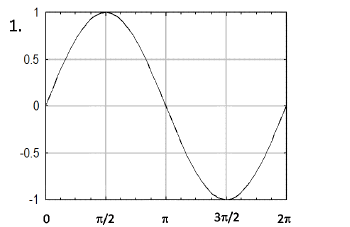
Relative rates of red blood cells production in bone marrow of different bones of different ages are shown below: Identify the correct figure.

QUESTION ID:112
The above figure depicts the regulation of hypothalamo-pituitary-adrenal (HPA) axis. Changes in cortisol level in Addison’s disease can lead to