 TLS Online
Performance Meter
0%
QUESTION ID:1
QUESTION ID:2
QUESTION ID:3
QUESTION ID:4
QUESTION ID:5
QUESTION ID:6
| Column I | Column II |
| (P) Pyruvate decarboxylase | i. Biocytin |
| (Q) Glyceraldehyde 3-phosphate dehydrogenase | ii. NADP+ |
| (R) Pyruvate carboxylase | iii. NAD+ |
| (S) Glucose-6-phosphate dehydrogenase | iv. Thiamine pyrophosphate |
QUESTION ID:7
| Column I | Column II |
| (P) Cholera toxin | (i) modifies Gαi |
| (Q) Pertussis toxin | (ii) inhibits c-AMP phosphodiesterase |
| (R) IP3 | (iii) modifies Gαs |
| (S) Caffeine | (iv) increases intracellular Ca2+ level |
QUESTION ID:8
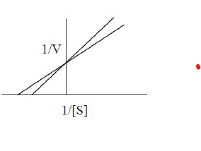
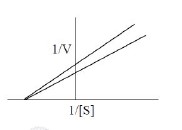
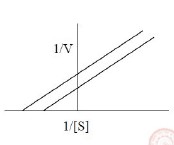
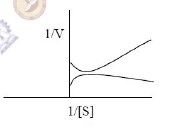
QUESTION ID:9
QUESTION ID:10

QUESTION ID:11
QUESTION ID:12
QUESTION ID:13
QUESTION ID:14
QUESTION ID:15
QUESTION ID:16
QUESTION ID:17
QUESTION ID:18
QUESTION ID:19
QUESTION ID:20
QUESTION ID:21
| GROUP I | GROUP II |
| P. Nitrobacter | 1. NO3− → NO2− |
| Q. Nitrite reductase | 2. N2 → 2NH3 |
| R. Nitrogenase | 3.NO2− → NH4+ |
| S. Nitrate reductase | 4. NO2− → NO3− |
QUESTION ID:22
 of -10 bar and pressure potential of 4 bar. On the other hand. “N" has osmotic potential
  of -12 bar and pressure potential of 5 bar.
 QUESTION ID:23
QUESTION ID:24

QUESTION ID:25
QUESTION ID:26
| GROUP I | GROUP II |
| P. The physical environment of an organism | 1. Trophic level |
Q. The totality of the needs of a population for survival and its resource utilization | 2. Habitat |
| R. The position of a species in a food chain | 3. Ecosystem |
S. Basic functional unit comprising living community and its physical environment | 4. Niche |
| 5. Ecological pyramid |
QUESTION ID:27
| GROUP I | GROUP II |
| P. Helium | 1. Agrobacterium tumefaciens |
| Q. Acetosyringone | 2. Microinjection |
| R. Polyethylene glycol | 3. Particle bombardment |
| S. Agarose embedding | 4. Protoplast |
QUESTION ID:28
| Pathogen | Disease | Plant |
| P. Blumeria graminis | i. Blast disease | 1. Groundnut |
| Q. Magnaporthe grisea | ii. Powdery mildew | 2. Apple |
| R. Venturia inaequalis | iii. Tikka disease | 3. Barley |
| S. Cercospora personata | iv. Scab disease | 4. Rice |
QUESTION ID:29

QUESTION ID:30
QUESTION ID:31
QUESTION ID:32

QUESTION ID:33
QUESTION ID:34
QUESTION ID:35
QUESTION ID:36
QUESTION ID:37
QUESTION ID:38
QUESTION ID:39
QUESTION ID:40
QUESTION ID:41

QUESTION ID:42

QUESTION ID:43
| Group I | Group II |
| (P) Plague | (I) Coxiella burnetii |
| (Q) Rabies | (II) Plasmodium spp. |
| (R) Q fever | (III) Yersinia pestis |
| (S) Malaria | (IV) Lyssavirus |
QUESTION ID:44
| Group I | Group II |
| (P) UvrABC endonuclease | (I) Retrovirus replication |
| (Q) Reverse transcriptase | (II) Base excision repair |
| (R) AP endonuclease | (III) Nucleotide excision repair |
| (S) ATP sulfurylase | (IV) Pyrosequencing |
QUESTION ID:45
| Group I | Group II |
| (P) Photoautotrophs | (I) Use inorganic chemical reactions for energy production |
| (Q) Chemoautotrophs | (II) Use organic compounds for energy production |
| (R) Photoheterotrophs | (III) Use sunlight as energy source and carbon dioxide as carbon source |
| (S) Chemoheterotrophs | (IV) Use sunlight as energy source and organic compounds as carbon source |
QUESTION ID:46
QUESTION ID:47
QUESTION ID:48
QUESTION ID:49
QUESTION ID:50
QUESTION ID:51
QUESTION ID:52
QUESTION ID:53
QUESTION ID:54
QUESTION ID:55
QUESTION ID:56
QUESTION ID:57
QUESTION ID:58
QUESTION ID:59
QUESTION ID:60
QUESTION ID:61
QUESTION ID:62
QUESTION ID:63

QUESTION ID:64
QUESTION ID:65
QUESTION ID:66
| Group I | Group II |
| P. Transferrin | (i) Uptake of glucose |
| Q. Insulin | (ii) Binds iron |
| R. α-macroglobulin | (iii) Substratum for cell attachment |
| S. Fibronectin | (iv) Proteinase inhibitor |
| (v) Binds to oxygen in RBC |
QUESTION ID:67
QUESTION ID:68
| Group I | Group II |
| P. Hedgehog signaling | (i) Involved in signaling at 4-cell embryo stage in C. elegans through glp 1 expression |
| Q. Hox proteins | (ii) Involves frizzled receptor on target cell membrane and establish polarity in insects |
| R. Wnt signaling | (iii) Plays critical role in facial morphogenesis in vertebrates and its mutation causes cyclopia |
| S. Notch signaling | (iv) Required for T-bx transcription factor expression for vertebrate limb development |
QUESTION ID:69
QUESTION ID:70
QUESTION ID:71
QUESTION ID:72
QUESTION ID:73
QUESTION ID:74
QUESTION ID:75
QUESTION ID:76
| Column I | Column II |
| P. HACCP | 1. International food standards |
| Q. FSSAI | 2. Quality control protocol |
| R. CIP | 3. Food plant sanitation and hygiene protocol |
| S. CODEX | 4. Indian food standards |
QUESTION ID:77
QUESTION ID:78
QUESTION ID:79
QUESTION ID:80
QUESTION ID:81
| Group I | Group II |
| P. Saponification number | 1. Unsaturation of fatty acid |
| Q. Iodine number | 2. Volatile water soluble fatty acid |
| R. Reichert Meissl number | 3. Hydroxy fatty acid |
| S. Acetyl value | 4. Molecular weight of fatty acid |
QUESTION ID:82
| Column I | Column II |
| P. Ethanol | 1. Canned vegetable |
| Q. Lactic acid | 2. Fish |
| R. Trimethylamine | 3. Butter |
| S. Volatile fatty acid | 4. Apple juice |
QUESTION ID:83

QUESTION ID:84
QUESTION ID:85
| Column I | Column II |
| P. Line 1 | 1. Dilatant |
| Q. Line 2 | 2. Newtonian |
| R. Line 3 | 3. Pseudoplastic |
| S. Line 4 | 4. Bingham plastic |

QUESTION ID:86
QUESTION ID:87
QUESTION ID:88
QUESTION ID:89
QUESTION ID:90
QUESTION ID:91
QUESTION ID:92
QUESTION ID:93
QUESTION ID:94

QUESTION ID:95
QUESTION ID:96
QUESTION ID:97
QUESTION ID:98
QUESTION ID:99
QUESTION ID:100
The points in the graph below represent the halts of a lift for durations of 1 minute. over a period of 1 hour.

Which of the following statements are correct?
i. The elevator never moves directly from any non-ground floor to another non-ground floor over the one hour period
ii. The elevator stays on the fourth floor for the longest duration over the one hour period
QUESTION ID:101
Replum is characteristic of family