 TLS Online
Performance Meter
0%
QUESTION ID:1
QUESTION ID:2
QUESTION ID:3
QUESTION ID:4

QUESTION ID:5
QUESTION ID:6
QUESTION ID:7
QUESTION ID:8
NAT Fill in the mussing value

QUESTION ID:9
QUESTION ID:10
QUESTION ID:11
The molecule having net 'non-zero dipole moment' is
QUESTION ID:12

QUESTION ID:13
The number of possible enantiomeric pair(s) in HOOC—CH(OH)-CH(OH)-COOH is
QUESTION ID:14
QUESTION ID:15

QUESTION ID:16
QUESTION ID:17
QUESTION ID:18
QUESTION ID:19
QUESTION ID:20
QUESTION ID:21

QUESTION ID:22

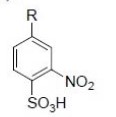
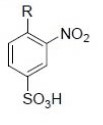
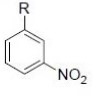
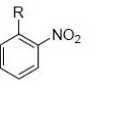
QUESTION ID:23
The order of resonance energy for the following molecules is

QUESTION ID:24
QUESTION ID:25
 at 0 °C and 1 atm, the coned statement is
QUESTION ID:26
QUESTION ID:27
Which one of the following bases is NOT found in the T-arm of an aminoacyl t-RNA?
QUESTION ID:28
Oxidation of one molecule of glucose via the glycerol-phosphate shuttle produces
QUESTION ID:29
Ribulose-5-phosphate epimerase is involved in which one of the following processes?
QUESTION ID:30
QUESTION ID:31
QUESTION ID:32
QUESTION ID:33
QUESTION ID:34
QUESTION ID:35
Which one of the following is NOT a receptor tyrosine kinase?
QUESTION ID:36
| Column-1 | Column-2 |
| P. Vitamin B1 | 1. Thiamine pyrophosphate |
| Q. Carboxypeptidase | 2. Aconitase |
| R. TCA cycle | 3. Sucrose |
| S. Reducing sugar | 4. Zn2+ |
| 5. Riboflavin | |
| 6. Lactose |
QUESTION ID:37
The following table provides information about four proteins.

Which one of the following options correctly identifies the order of elution in the exclusion chromatography and the increasing order of mobility in SDS polyacrylamide gel?
QUESTION ID:38
QUESTION ID:39
| Column I | Column II |
| P. Complement C1q | i. CD34 |
| Q. L-Selectin | ii. Complement C5b |
| R. Membrane Attack Complex | iii. Fc region of antibody |
| S. T-Helper cells | iv. Complement C5a |
| v. CD40L |
QUESTION ID:40
 at —50 mV membrane potential is kJ mot-1. [ R = 8314 JK -1mol -1 and 1 Faraday = 96500 Coulombs]
 QUESTION ID:41


QUESTION ID:42
Which of the following statements is/are INCORRECT about hemoglobin (Hb)?
I. Hb demonstrates higher oxygen carrying capacity compared to myoglobin
II. There is covalent bonding between the four subunits of Hb
III. During deoxygenation the loss of the first oxygen molecule from oxygenated H13 promotes the dissociation of oxygen from the other subunits
QUESTION ID:43

QUESTION ID:44
| Column I | Column II |
| P. 1000 g, 10 min | i. Microsomes and small vesicles |
| Q. 20000 g, 30 min | ii. Ribosomes |
| R. 80000 g, 1 hour | iii. Nuclei |
| S. 150000 g, 3 hours | iv. Lysosomes and peroxisomes |
QUESTION ID:45

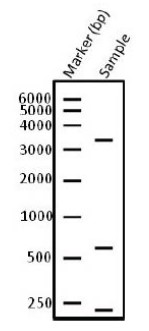
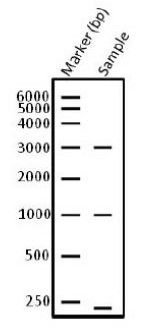
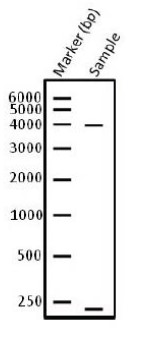
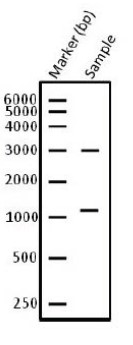
QUESTION ID:46
QUESTION ID:47
QUESTION ID:48
QUESTION ID:49
During fatty acid biosynthesis, the first intermediate malonyl-CoA is formed from
QUESTION ID:50
QUESTION ID:51
QUESTION ID:52
Which of the following reduces the transpiration rate when applied to aerial parts of plants?
QUESTION ID:53
QUESTION ID:54
Which one of the followings is NOT a cryoprotectant for plant tissue?
QUESTION ID:55
Two similar holotypes are called
QUESTION ID:56
QUESTION ID:57
QUESTION ID:58
| Disease | Causal Organism |
| P. Loose smut of wheat | 1. Cercospora personata |
| Q. Wart disease of potato | 2. Alternaria solani |
| R. Panama disease of banana | 3. Synchytrium endobioticum |
| S. Tikka disease of groundnut | 4. Ustilago tritici |
| 5. Fusarium oxysporum | |
| 6. Erwinia amylovora |
QUESTION ID:59
| Product | Source | Plant part |
| P. Annatto | 1. Acacia catechu | i. Seed |
| Q. Cutch | 2. Rubia tinctorum | ii. Leaf |
| R. Henna | 3. Bixa orellana | iii. Root |
| S. Alizarin | 4. Lawsonia inermis | iv. Stem |
QUESTION ID:60
| Floral structure | Family | Plant |
| P. Gynostegium | 1. Orchidaceae | i. Ocimum sanctum |
| Q. Gynostemium | 2. Lamiaceae | ii. Cleome gynandra |
| R. Gynobasic style | 3. Capparidaceae | iii. Calotropis procera |
| S. Gynophore | 4. Asclepiadaceae | iv. Vanilla planifolia |
QUESTION ID:61
QUESTION ID:62
QUESTION ID:63
QUESTION ID:64
QUESTION ID:65
QUESTION ID:66
QUESTION ID:67
QUESTION ID:68
QUESTION ID:69
QUESTION ID:70
| Group I | Group II |
| (P) Sanger | (i) DNA double helix structure |
| (Q) Watson and Crick | (ii) DNA sequencing |
| (R) Waksman | (iii) Complement |
| (S) Bordet | (iv) Streptomycin |
| (v) Immune tolerance |
QUESTION ID:71
QUESTION ID:72
QUESTION ID:73
QUESTION ID:74
QUESTION ID:75
QUESTION ID:76
QUESTION ID:77

QUESTION ID:78
QUESTION ID:79
An oil immersion objective of a light microscope has a numerical aperture of 1.25. Using the Abbe equation, the maximum theoretical resolving power (in nm) of the microscope with this objective and blue light (wavelength =450 nm) is
QUESTION ID:80
QUESTION ID:81
QUESTION ID:82
QUESTION ID:83
QUESTION ID:84
QUESTION ID:85

QUESTION ID:86
QUESTION ID:87
QUESTION ID:88
QUESTION ID:89
QUESTION ID:90
QUESTION ID:91
QUESTION ID:92
QUESTION ID:93
QUESTION ID:94
QUESTION ID:95
QUESTION ID:96
| P. Calotes versicolor | i. Insecta |
| Q. Periplaneta americana | ii. Reptilia |
| R. Glyphidrilus birmancus | iii. Actinopterygii |
| S. Clarias batracus | iv. Clitellata |
QUESTION ID:97
QUESTION ID:98
QUESTION ID:99
Defect in poly-A tail formation in eukaryotic mRNA leads to
QUESTION ID:100
QUESTION ID:101

QUESTION ID:102

QUESTION ID:103
QUESTION ID:104
QUESTION ID:105
QUESTION ID:106
QUESTION ID:107
QUESTION ID:108
QUESTION ID:109
QUESTION ID:110
QUESTION ID:111
QUESTION ID:112
QUESTION ID:113
QUESTION ID:114
QUESTION ID:115
QUESTION ID:116
| Group I | Group II |
| (P) Chymosin | (1) Removal of cooked flavor from milk |
| (Q) Sulfhydryl oxidase | (2) Soybean milk coagulation |
| (R) β-Galactosidase | (3) For rennet puddings |
| (S) Microbial proteases | (4) Lactose removal |
QUESTION ID:117
QUESTION ID:118
Whole milk (34,950 kg) containing 4% fat is to be separated in 6 h period into skim milk with 0.45% fat and cream with 45% fat. The flow rate of cream stream (kg/h) from the separator is
QUESTION ID:119
| Group I | Group II |
| (P) Corn | (1) Lycopene |
| (Q) Red pepper | (2) β-Carotene |
| (R) Pumpkin | (3) Capsanthin |
| (S) Tomato | (4) Lutein |
QUESTION ID:120
QUESTION ID:121
QUESTION ID:122
QUESTION ID:123
QUESTION ID:124
| Group I | Group II |
| (P) Degumming | (1) Crystallization of triacylglycerol by cooling to remove fat crystals |
| (Q) Deacidifying | (2) Passing heated oil over charcoal |
| (R) Bleaching | (3) Using alkaline solution to remove fatty acids |
| (S) Winterizing | (4) Wetting with water to remove lecithin |
QUESTION ID:125