 TLS Online
Performance Meter
0%
QUESTION ID:1
QUESTION ID:2
QUESTION ID:3
QUESTION ID:4

QUESTION ID:5
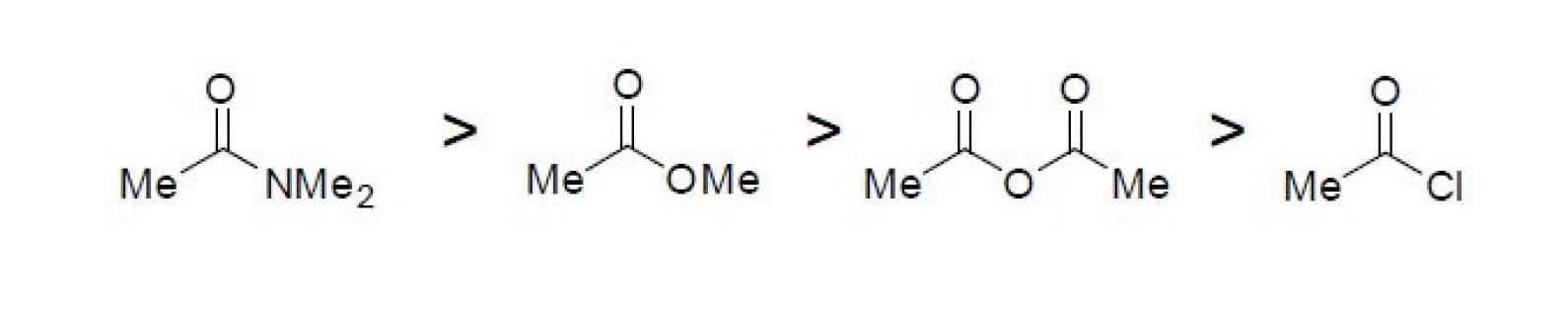
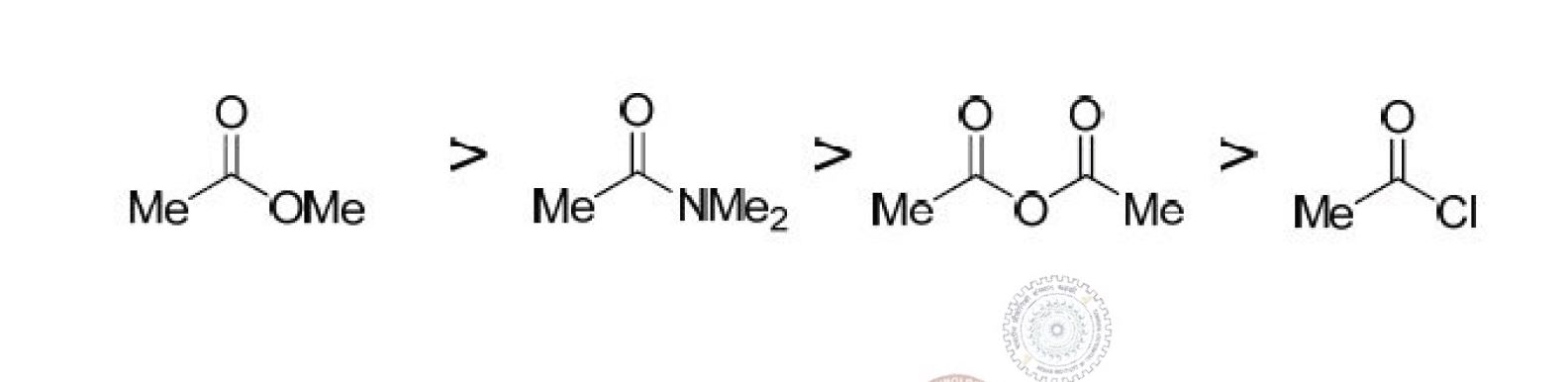
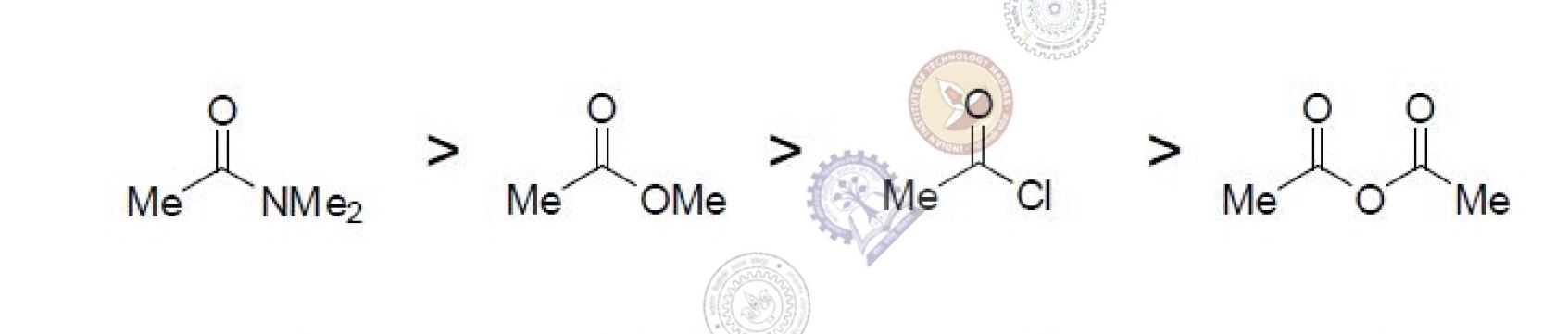
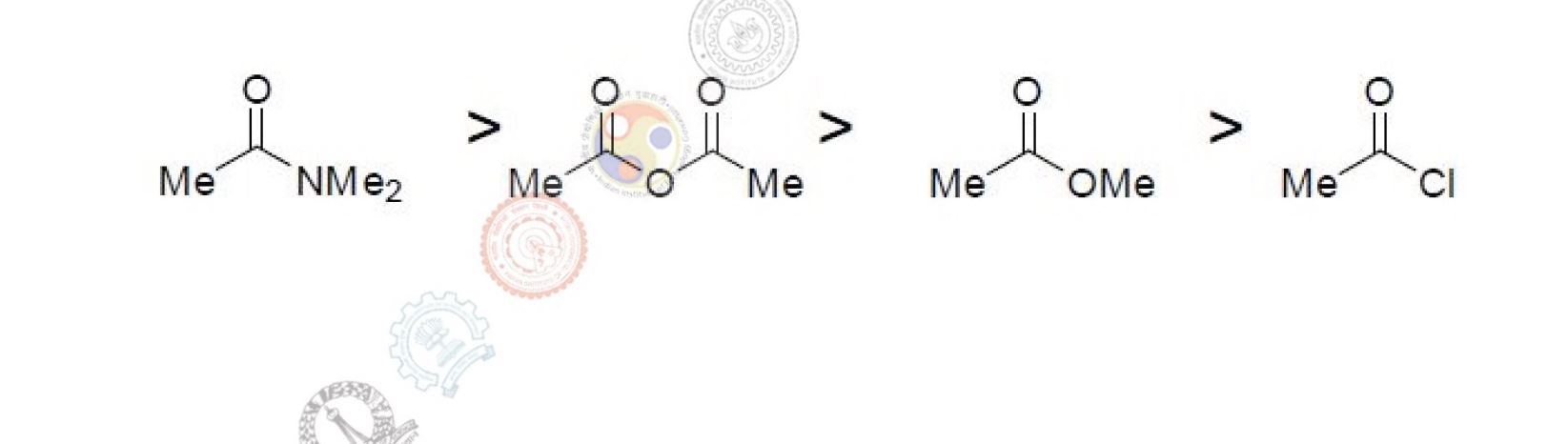
The correct order of stability in water is
QUESTION ID:6
QUESTION ID:7
QUESTION ID:8
QUESTION ID:9
QUESTION ID:10
 B products, the following data was obtained.
QUESTION ID:11
 e Ag is -0.80 V)
 QUESTION ID:12
One gram of a. protein is dissolved in one liter of water. The resulting solution exerts an osmotic pressure of 1.4 Torr at 298 K. Assuming that the protein does not ionize in solution, the molecular weight of the protein is g mot'. (R = 0.082 L atm mol-1K-1)
QUESTION ID:13
The type of nucleophilic substitution and the possible products for each of the reactions P and Q are


QUESTION ID:14

QUESTION ID:15
The major product in the following reaction is


QUESTION ID:16
The molecular weight of a protein as determined by native PAGE is 400 kDa. This protein when run on a non-reducing SDS-PAGE gave a band of 200 kDa, and on a reducing SDS-PAGE, gave a band of 100 kDa. The protein has
QUESTION ID:17
QUESTION ID:18
QUESTION ID:19
QUESTION ID:20
QUESTION ID:21
QUESTION ID:22
QUESTION ID:23
QUESTION ID:24
Which one of the following will NOT form lipid bilayer?
QUESTION ID:25
Which one of the following features is NOT appropriate for Fab fragment of IgG ?
QUESTION ID:26
QUESTION ID:27
QUESTION ID:28
QUESTION ID:29
QUESTION ID:30
QUESTION ID:31
| Column I | Column II |
| (P) Pyruvate decarboxylase | i. Biocytin |
| (Q) Glyceraldehyde 3-phosphate dehydrogenase | ii. NADP+ |
| (R) Pyruvate carboxylase | iii. NAD+ |
| (S) Glucose-6-phosphate dehydrogenase | iv. Thiamine pyrophosphate |
QUESTION ID:32
| Column I | Column II |
| (P) Cholera toxin | (i) modifies Gαi |
| (Q) Pertussis toxin | (ii) inhibits c-AMP phosphodiesterase |
| (R) IP3 | (iii) modifies Gαs |
| (S) Caffeine | (iv) increases intracellular Ca2+ level |
QUESTION ID:33
QUESTION ID:34
QUESTION ID:35

QUESTION ID:36
QUESTION ID:37
QUESTION ID:38
QUESTION ID:39
QUESTION ID:40
QUESTION ID:41
QUESTION ID:42
QUESTION ID:43
QUESTION ID:44
QUESTION ID:45
QUESTION ID:46
| GROUP I | GROUP II |
| P. Nitrobacter | 1. NO3− → NO2− |
| Q. Nitrite reductase | 2. N2 → 2NH3 |
| R. Nitrogenase | 3.NO2− → NH4+ |
| S. Nitrate reductase | 4. NO2− → NO3− |
QUESTION ID:47
 of -10 bar and pressure potential of 4 bar. On the other hand. “N" has osmotic potential
  of -12 bar and pressure potential of 5 bar.
 QUESTION ID:48
QUESTION ID:49

QUESTION ID:50
QUESTION ID:51
| GROUP I | GROUP II |
| P. The physical environment of an organism | 1. Trophic level |
Q. The totality of the needs of a population for survival and its resource utilization | 2. Habitat |
| R. The position of a species in a food chain | 3. Ecosystem |
S. Basic functional unit comprising living community and its physical environment | 4. Niche |
| 5. Ecological pyramid |
QUESTION ID:52
| GROUP I | GROUP II |
| P. Helium | 1. Agrobacterium tumefaciens |
| Q. Acetosyringone | 2. Microinjection |
| R. Polyethylene glycol | 3. Particle bombardment |
| S. Agarose embedding | 4. Protoplast |
QUESTION ID:53
| Pathogen | Disease | Plant |
| P. Blumeria graminis | i. Blast disease | 1. Groundnut |
| Q. Magnaporthe grisea | ii. Powdery mildew | 2. Apple |
| R. Venturia inaequalis | iii. Tikka disease | 3. Barley |
| S. Cercospora personata | iv. Scab disease | 4. Rice |
QUESTION ID:54

QUESTION ID:55
QUESTION ID:56
QUESTION ID:57

QUESTION ID:58
QUESTION ID:59
QUESTION ID:60
QUESTION ID:61
QUESTION ID:62
QUESTION ID:63
QUESTION ID:64
QUESTION ID:65
QUESTION ID:66

QUESTION ID:67

QUESTION ID:68
| Group I | Group II |
| (P) Plague | (I) Coxiella burnetii |
| (Q) Rabies | (II) Plasmodium spp. |
| (R) Q fever | (III) Yersinia pestis |
| (S) Malaria | (IV) Lyssavirus |
QUESTION ID:69
| Group I | Group II |
| (P) UvrABC endonuclease | (I) Retrovirus replication |
| (Q) Reverse transcriptase | (II) Base excision repair |
| (R) AP endonuclease | (III) Nucleotide excision repair |
| (S) ATP sulfurylase | (IV) Pyrosequencing |
QUESTION ID:70
| Group I | Group II |
| (P) Photoautotrophs | (I) Use inorganic chemical reactions for energy production |
| (Q) Chemoautotrophs | (II) Use organic compounds for energy production |
| (R) Photoheterotrophs | (III) Use sunlight as energy source and carbon dioxide as carbon source |
| (S) Chemoheterotrophs | (IV) Use sunlight as energy source and organic compounds as carbon source |
QUESTION ID:71
QUESTION ID:72
QUESTION ID:73
QUESTION ID:74
QUESTION ID:75
QUESTION ID:76
QUESTION ID:77
QUESTION ID:78
QUESTION ID:79
QUESTION ID:80
QUESTION ID:81
QUESTION ID:82
QUESTION ID:83
QUESTION ID:84
QUESTION ID:85
QUESTION ID:86
QUESTION ID:87
QUESTION ID:88

QUESTION ID:89
QUESTION ID:90
QUESTION ID:91
| Group I | Group II |
| P. Transferrin | (i) Uptake of glucose |
| Q. Insulin | (ii) Binds iron |
| R. α-macroglobulin | (iii) Substratum for cell attachment |
| S. Fibronectin | (iv) Proteinase inhibitor |
| (v) Binds to oxygen in RBC |
QUESTION ID:92
QUESTION ID:93
| Group I | Group II |
| P. Hedgehog signaling | (i) Involved in signaling at 4-cell embryo stage in C. elegans through glp 1 expression |
| Q. Hox proteins | (ii) Involves frizzled receptor on target cell membrane and establish polarity in insects |
| R. Wnt signaling | (iii) Plays critical role in facial morphogenesis in vertebrates and its mutation causes cyclopia |
| S. Notch signaling | (iv) Required for T-bx transcription factor expression for vertebrate limb development |
QUESTION ID:94
QUESTION ID:95
QUESTION ID:96
QUESTION ID:97
QUESTION ID:98
QUESTION ID:99
QUESTION ID:100
QUESTION ID:101
| Column I | Column II |
| P. HACCP | 1. International food standards |
| Q. FSSAI | 2. Quality control protocol |
| R. CIP | 3. Food plant sanitation and hygiene protocol |
| S. CODEX | 4. Indian food standards |
QUESTION ID:102
QUESTION ID:103
QUESTION ID:104
QUESTION ID:105
QUESTION ID:106
| Group I | Group II |
| P. Saponification number | 1. Unsaturation of fatty acid |
| Q. Iodine number | 2. Volatile water soluble fatty acid |
| R. Reichert Meissl number | 3. Hydroxy fatty acid |
| S. Acetyl value | 4. Molecular weight of fatty acid |
QUESTION ID:107
| Column I | Column II |
| P. Ethanol | 1. Canned vegetable |
| Q. Lactic acid | 2. Fish |
| R. Trimethylamine | 3. Butter |
| S. Volatile fatty acid | 4. Apple juice |
QUESTION ID:108

QUESTION ID:109
QUESTION ID:110
| Column I | Column II |
| P. Line 1 | 1. Dilatant |
| Q. Line 2 | 2. Newtonian |
| R. Line 3 | 3. Pseudoplastic |
| S. Line 4 | 4. Bingham plastic |

QUESTION ID:111
QUESTION ID:112
QUESTION ID:113
QUESTION ID:114
QUESTION ID:115
QUESTION ID:116
QUESTION ID:117
QUESTION ID:118
QUESTION ID:119

QUESTION ID:120
QUESTION ID:121
QUESTION ID:122
QUESTION ID:123
QUESTION ID:124
QUESTION ID:125
The points in the graph below represent the halts of a lift for durations of 1 minute. over a period of 1 hour.

Which of the following statements are correct?
i. The elevator never moves directly from any non-ground floor to another non-ground floor over the one hour period
ii. The elevator stays on the fourth floor for the longest duration over the one hour period
QUESTION ID:126
Replum is characteristic of family