
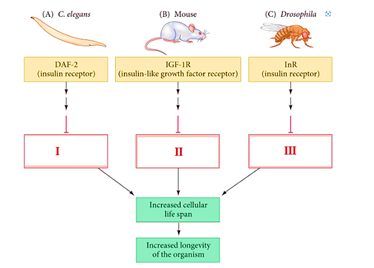
#Question id: 3285
#11. Evolution and Behavior
Natural selection continually operates on each species to keep up with improvements made by competing species; each species’ environment deteriorates as its competitors evolve new adaptations. This is known as
#Question id: 3286
#11. Evolution and Behavior
In a human population, the gene frequencies of the alleles for the ABO system are as follows:
A = 29% B = 7% 0=64%
Assuming complete random mating and Hardy-Weinberg equilibrium,
What are the blood type A frequencies in this population?
#Question id: 3287
#11. Evolution and Behavior
Which statement is not an assumption of the Hardy–Weinberg law?
a. The allelic frequencies (p and q) are equal.
b. The population is randomly mating.
c. The population is large.
d. Locus is di-allelic
#Question id: 3291
#11. Evolution and Behavior
Which of the following is the most predictable outcome of increased gene flow between two populations?
#Question id: 3292
#11. Evolution and Behavior
Which of the following is correct observation?
#Question id: 3293
#11. Evolution and Behavior
In a Hardy-Weinberg population of butterflies find that 32% are heterozygous at a particular locus. What should be the frequency of the homozygous individuals in this population?