TLS Online TPP Program

#Question id: 3981


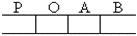
The diagram below represents a hypothetical operon in the bacterium E. coli.  The operon consists of two structural genes (A and B), which code for the enzymes A-ase and B-ase, respectively, and also includes P (promoter) and O (operator) regions as shown.

 When a certain compound (X) is added to the growth medium of E. coli, the separate enzymes A-ase and B-ase are both synthesized at a 50-fold higher rate than in the absence of X.  (X has a molecular weight of about 200.)  Which of the following statements is true of the operon decribed above?

#Unit 3. Fundamental Processes
  1. All four genes (A, B, O, and P) will be transcribed into an mRNA that will then be translated into four different proteins.

  2. The 3' end of the mRNA from the operon will correspond to the left end of the operon as drawn.

  3. The 5' end of the messenger from this operon will correspond to the right end of the operon as drawn.

  4. When RNA polymerase makes mRNA from this operon, it begins RNA synthesis just to the left of gene A.

More Questions
TLS Online TPP Program

#Question id: 10786

#Unit 6. System Physiology – Plant

Alkaloids are usually synthesized from one of a few common amino acids such as___

TLS Online TPP Program

#Question id: 10787

#Unit 6. System Physiology – Plant

Which structure represents cinnamic acid___

TLS Online TPP Program

#Question id: 10788

#Unit 6. System Physiology – Plant

Phenyl ammonia lyase (PAL) involved in biosynthesis of phenolic compound in plants. Following are some statements regarding the action of PAL;

a) PAL catalyze conversion of phenyl alanine to p-coumaric acid

b) PAL catalyzes the conversion of phenyl alanine into trans-Cinnamic acid by elimination of an ammonia molecule

c) The activity of PAL is increased by environmental factors, such as low nutrient levels, light, and fungal infection

d) PAL is situated at a branch point between primary and secondary metabolism, so the reaction that it catalyzes is an important regulatory step in the formation of many phenolic compounds

Which of the following combinations of above statement is true?

TLS Online TPP Program

#Question id: 10789

#Unit 6. System Physiology – Plant

Trans-cinnamic acid, p-coumaric acid, and their derivatives are simple phenolic compounds known as

TLS Online TPP Program

#Question id: 10790

#Unit 6. System Physiology – Plant

chalcone synthase (CHS) involved in biosynthesis of phenolic compound in plants. Following are some statements regarding the action of CHS;

 a) Chalcone synthase catalyzes the conversion of p-Coumaroyl-CoA into Chalcones

 b) Substrate for Chalcone synthase is chalcone

 c) CHS activity increased by environmental factors, such as light, and fungal infection

 d) Chalcone synthase is enzyme in flavonoid biosynthesis catalyzes stepwise condensation into p-Coumaric acid by using Malonyl-CoA molecules

 Which of the following combinations of above statement is true?

TLS Online TPP Program

#Question id: 10791

#Unit 6. System Physiology – Plant

Following are certain statements regarding furanocoumarins;

 a) furanocoumarins have an attached furan ring

 b) These compounds are toxic until they are activated by sunlight in the ultraviolet A (UV-A) region (320–400 nm)  

 c) Light activated furanocoumarins can insert themselves into the double helix of DNA and bind to the pyrimidine bases, thus blocking transcription and repair and leading eventually to cell death   

 d) Phototoxic furanocoumarins are especially abundant in members of the Umbelliferae family, including celery, parsnip, and parsley.

 Which of the following combination from the above statements is correct?