TLS Online TPP Program

#Question id: 95


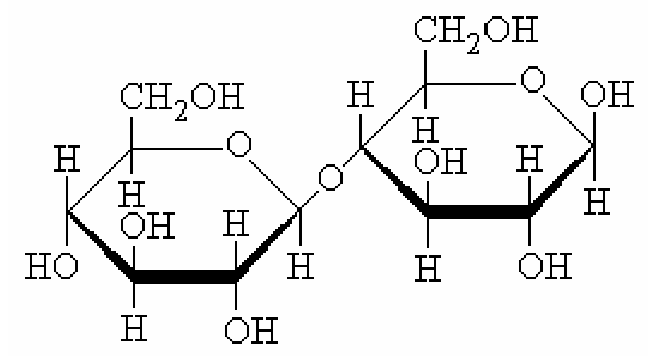
What is the name of the disaccharide shown below that is formed by joining two monomers of D-glucose

#Zoology
  1. β-D-glucopyranosyl-(1→4)-β-D-glucopyranose

  2. α-D-glucopyranosyl-(1→4)-α-D-glucopyranose

  3. β-D-glucofuranosyl-(1→4)-β-D-glucofuranose

  4. α-D-glucopyranosyl-(1→3)-β-D-glucopyranose

More Questions
TLS Online TPP Program
#Question id: 23147

#Life Sciences

In fluorescence microscopy why the fluorescence occurs at longer wavelength when there shorter   wavelength of light is applied?

TLS Online TPP Program

#Question id: 23147

#Applied Microbiology

In fluorescence microscopy why the fluorescence occurs at longer wavelength when there shorter   wavelength of light is applied?

TLS Online TPP Program

#Question id: 23148

#Zoology

There are two proteins A and B to be visualized under fluorescence microscopy. Both of them are excited with same wavelength of light but A emits longer wavelength. Hence we can conclude that 
1. A is denser molecule than B
2. B is denser molecule than A
3. A is lighter molecule than B
4. B is lighter molecule than A
Which of the following option is incorrect?

TLS Online TPP Program

#Question id: 23148

#Life Sciences

There are two proteins A and B to be visualized under fluorescence microscopy. Both of them are excited with same wavelength of light but A emits longer wavelength. Hence we can conclude that 
1. A is denser molecule than B
2. B is denser molecule than A
3. A is lighter molecule than B
4. B is lighter molecule than A
Which of the following option is incorrect?

TLS Online TPP Program

#Question id: 23148

#Applied Microbiology

There are two proteins A and B to be visualized under fluorescence microscopy. Both of them are excited with same wavelength of light but A emits longer wavelength. Hence we can conclude that 
1. A is denser molecule than B
2. B is denser molecule than A
3. A is lighter molecule than B
4. B is lighter molecule than A
Which of the following option is incorrect?

TLS Online TPP Program

#Question id: 23156

#Zoology

Most widely used method of detecting specific proteins, uses an antibody to which a fluorescent dye has been covalently attached