TLS Online TPP Program

#Question id: 7183


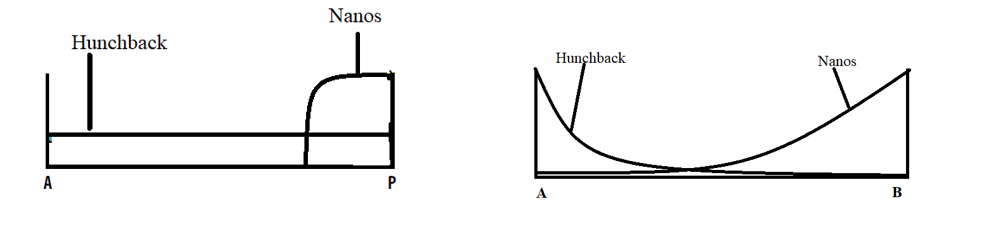
Following graphs (A and B) represents establishment of a maternal gradient in Hunchback protein.


which of the following statements are correct according to graphs?

#Unit 5. Developmental Biology
  1. Graph A shows unfertilized egg, in which maternal hunchback mRNA is present at a relatively low level throughout the egg, whereas nanos mRNA is located posteriorly and Graph B shows fertilized egg, in which nanos mRNA is translated and nanos protein blocks translation of hunchback mRNA in the posterior regions, giving rise to a shallow antero-posterior gradient in maternal Hunchback protein.
  2. Graph A shows fertilized egg, in which nanos mRNA is translated and nanos protein blocks translation of hunchback mRNA in the posterior regions, giving rise to a shallow antero-posterior gradient in maternal Hunchback protein and Graph B shows unfertilized egg, in which maternal hunchback mRNA is present at a relatively low level throughout the egg, whereas nanos mRNA is located posteriorly.
  3. Graph A shows unfertilized egg, in which nanos mRNA is translated and nanos protein blocks translation of hunchback mRNA in the posterior regions, giving rise to a shallow antero-posterior gradient in maternal Hunchback protein and Graph B shows fertilized egg, in which maternal hunchback mRNA is present at a relatively low level throughout the egg, whereas nanos mRNA is located posteriorly.
  4. Graph A and B both shows fertilized egg, in which nanos mRNA is translated and hunchback mRNA is untranslated.
More Questions
TLS Online TPP Program

#Question id: 2824

#Unit 2. Cellular Organization

Plant mitochondrial DNA

a. is the same size as human mitochondrial DNA.

b. encodes a 5S mitochondrial rRNA.

c. contains multiple copies that recombine with each other.

d. uses the standard genetic code.

TLS Online TPP Program

#Question id: 2825

#Unit 2. Cellular Organization

Metaphase chromosomes can be identified

a. by shape.                 

b. by the size and number of introns.

c. by banding patterns with Giemsa reagent.

d. by chromosome painting.

TLS Online TPP Program

#Question id: 2826

#Unit 2. Cellular Organization

An open reading frame (ORF) is defined as a DNA sequence that

a. begins with a start codon.               

b. ends with a stop codon.

c. contains 50 codons.   

d. contains approximately an equal frequency of A, T, G, and C.

TLS Online TPP Program

#Question id: 2827

#Unit 2. Cellular Organization

Two related genes that are derived from a gene duplication event are considered to be

a. homologous.                                   

b. paralogous.

c. orthologous.                       

d. members of a gene family.

TLS Online TPP Program

#Question id: 2828

#Unit 2. Cellular Organization

A transcriptionally active gene compared with a transcriptionally inactive gene would be expected to

a. contain acetylated histones.           

b. contain unacetylated histones.

c. be sensitive to DNase I.                 

d. be resistant to DNase I.

TLS Online TPP Program

#Question id: 2829

#Unit 2. Cellular Organization

Scaffold-associated regions

a. are the chromosome attachment points for the mitotic spindle.

b. can insulate transcription units from each other.

c. are the points at which DNA interacts with histone proteins.

d. are found between transcription units.